
Access the Dutch & EU Market with a General Fiscal Representative (GFR)
Applicable to all non-Dutch companies, including those from other EU member states and non-EU countries.
Expanding into the European market?
Setting up an overseas warehouse?
Both parties reluctant to pay VAT?
Customers requesting DDP?
Unclear on import & VAT filing procedures?
Confused by EORI and VAT regulations?
Unsure about VAT refunds or deferral rules?
Facing challenges with e-commerce compliance?
Contact us —— CiiMii will provide clear answers to all your questions.
Reduce VAT risks | Boost cross-border efficiency
CiiMii, your most trusted partner for European VAT compliance.
As a General Fiscal Representative (GFR) in the Netherlands, we assist non-Dutch companies in obtaining an offshore Dutch VAT number and manage their Dutch VAT obligations in a compliant and efficient manner. Through our GFR service, foreign businesses can apply for and use the Article 23 License—allowing them to import goods into the Netherlands without paying import VAT upfront.
With the Article 23 License, import VAT is deferred to the VAT return instead of being paid at the border, significantly improving cash flow, expediting customs clearance, and enabling faster access to the European market.
Business Scenario 1 | Import from Non-EU → Stored in Dutch Warehouse → Sold Across the EU

Typical Supply Chain:
Export Origin: China / USA / UK / other non-EU countries
Import country: The Netherlands
Customs Clearance: Use your own Dutch offshore VAT number + Art.23 VAT deferment → no VAT payment when declaring import
Warehousing: Goods stored in a Dutch 3PL warehouse (standard or bonded)
Downstream Sales:
To Dutch local business customers: Issue no-VAT invoices → VAT exempt
To business customers in other EU countries: Issue zero-rated invoices → VAT exempt
To non-EU business customers or consumers: Issue zero-rated invoices → VAT exempt
B2C via your own website: Use OSS (One-Stop Shop) to declare cross-border EU retail VAT and pay via the Dutch tax office (which distributes it to the relevant EU countries)
B2C via e-commerce platforms: OSS registration is not required; total sales can be reported quarterly as “deemed B2B sales,” zero-rated VAT applicable → VAT exempt
Settlement & Compliance:
Periodically submit Dutch VAT returns, EU cross-border B2B transaction reports, and, if necessary, EU cross-border transport reports. Retain proof such as customs declarations (IM), tax assessments (UTB), and shipping documents (POD/CMR).
Key Benefits:
Import VAT deferment: Significantly improves cash flow
Centralized Dutch warehousing: Shortens EU delivery times
Unified VAT compliance: Manage all EU B2B/B2C shipments under a single Dutch offshore VAT number
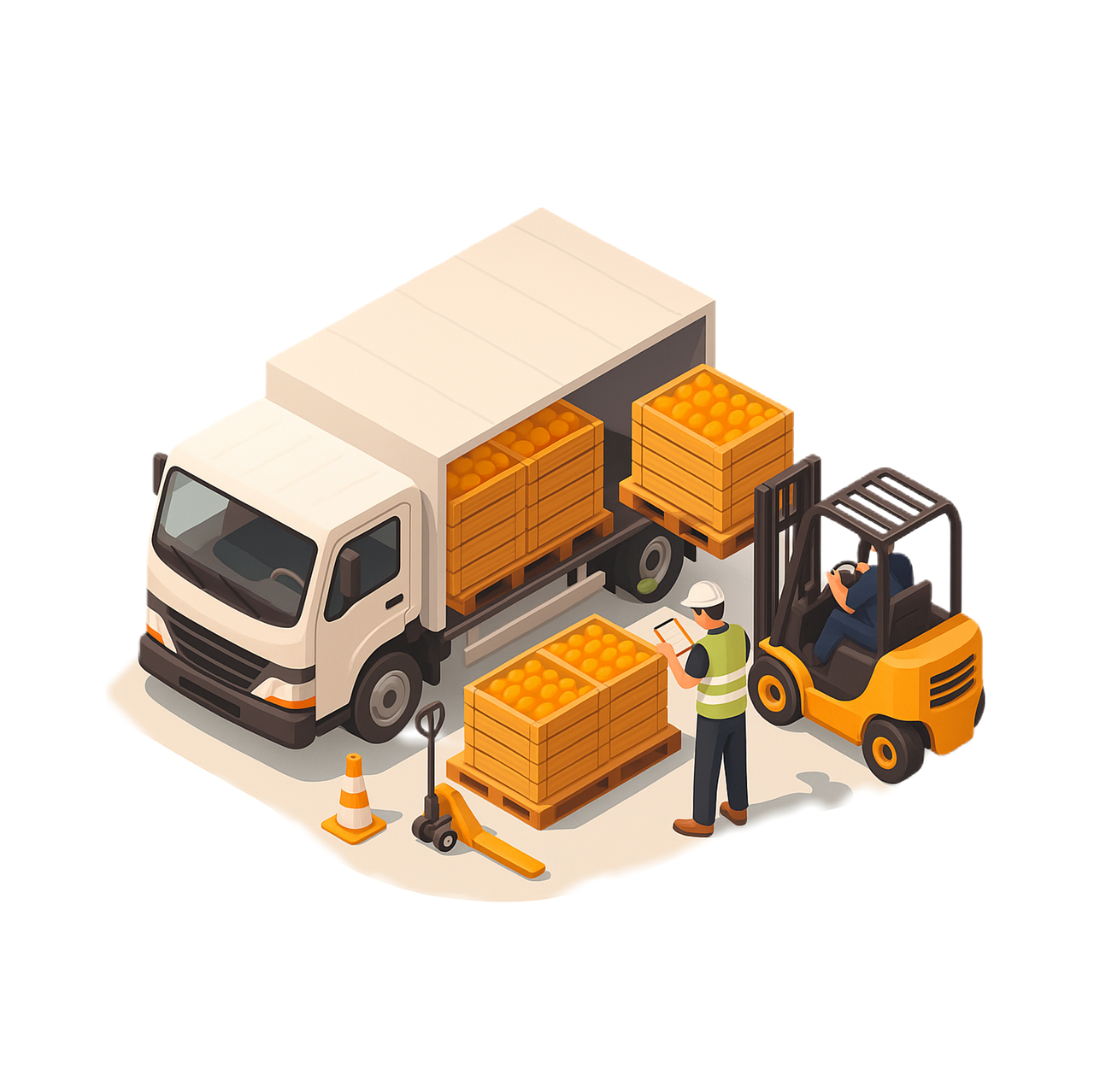
Business Scenario 2|Import from Non-EU → Cross-Dock → Direct Delivery to Customers
Typical Supply Chain:
Export Origin: China / USA / UK / other non-EU countries
Import country: The Netherlands
Customs Clearance: Use your own Dutch offshore VAT number + Art.23 VAT deferment → no VAT payment when declaring import
Warehousing: No long-term storage. Goods only stay briefly at the port or a transit hub for cross-docking or secondary sorting, then dispatched the same day or next day.
Downstream Sales:
To Dutch business customers: Issue no-VAT invoices → VAT exempt
To business customers in other EU countries: Issue zero-rated invoices → VAT exempt
To non-EU business customers or consumers: Issue zero-rated invoices → VAT exempt
B2C via e-commerce platforms: OSS not required; report total sales quarterly as “deemed B2B sales,” zero-rated VAT → VAT exempt
Settlement & Compliance:
Periodically submit Dutch VAT returns, EU cross-border B2B transaction reports, and (if required) EU cross-border transport reports. Retain supporting documents such as customs declarations (IM), tax assessments (UTB), and proof of transport (POD/CMR).
Applicable Scenarios:
Businesses focusing on direct or batch shipments
Companies that prefer not to hold inventory in the Netherlands, but still want to benefit from Art.23 Import VAT deferment
What CiiMii Delivers for You (Full-Stack GFR Services)

Registration & Licenses
Application and maintenance of a Dutch non-resident VAT number
Application for EU customs registration (EORI)
Application for Article 23 VAT deferment license
Ongoing Compliance & Filing
Periodic submission of VAT returns, EU Sales Listings, and (where required) EU Intrastat declarations
Submission of supplementary VAT returns
Review of invoice compliance (VAT rates, exemption clauses, invoice requirements, etc.)
Retention and verification of cross-border supporting documents (transport proofs, commercial documents, etc.)
OSS assessment and declarations (for B2C e-commerce, if applicable)
Internal Control & Risk Management
Identification and mitigation of VAT risk areas
Assistance with tax authority inquiries and audit defense, including preparation of supporting documentation
Operational Support
Recommendations on invoice templates
Advice on Incoterms/importer of record choices (DDP/DAP, etc.), ensuring VAT and customs alignment
Team training: compliance guidelines for sales, operations, and finance teams
Tips (Common Considerations)
For B2C retail, consider using OSS to reduce the cost and complexity of multi-country VAT registrations.
Companies already VAT-registered in another EU country can also make use of the General Fiscal Representative (GFR), as long as they are not a Dutch entity—allowing them to leverage Dutch ports and the Article 23 VAT deferment for better cash-flow management.
Interested in learning more? Get in touch with us 👇
🔗 Tell us more about your business in the Netherlands
💌 Email: info@ciimii.com
💬 WeChat: olla-nl